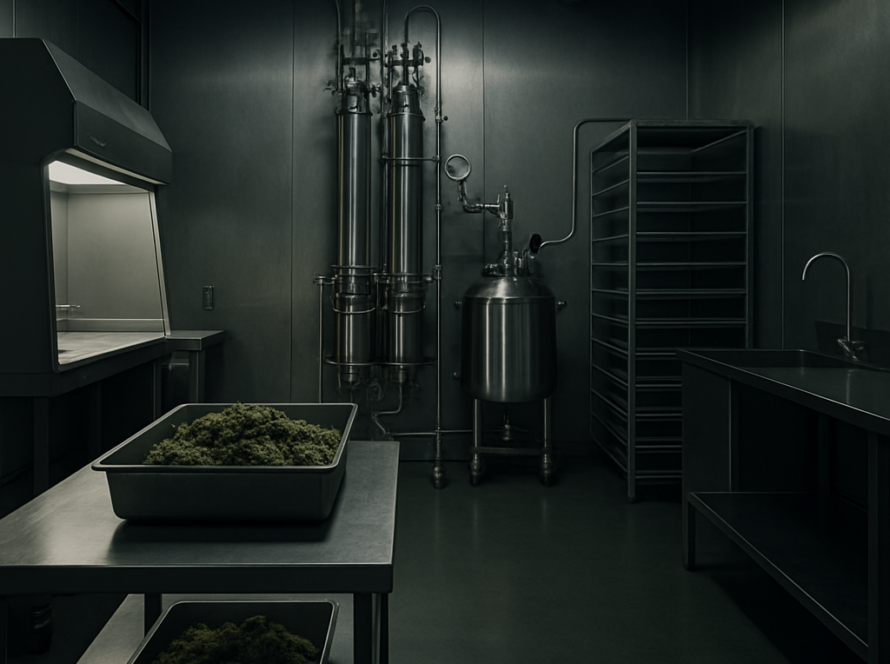
Cannabis Distillate Production: The Journey from Crude to Refined
At LimeLine, we’ve honed our cannabis distillate production process to create a reliable, potent, and cost-effective product that serves as the workhorse of the mass market. By transforming crude extracts into refined THC distillate, we’re able to deliver a product that meets the high demand for consistency and versatility—perfect for everything from edibles to distillate carts.
Starting with Ethanol or CO₂ Crude
Our journey begins with either ethanol or CO₂ extraction, both of which we’ve found to be effective methods for producing crude cannabis oil. Each method has its advantages: ethanol is often more cost-effective for large-scale operations, while CO₂ extraction typically results in a cleaner profile. At LimeLine, we use CO₂ extraction for our premium batches, ensuring we capture a broad spectrum of cannabinoids and terpenes, while our ethanol process is ideal for larger runs.
Winterization: Purifying the Crude
Once we have our crude in hand, the first step in refining it is winterization. This process involves dissolving the crude oil in ethanol and chilling it to precipitate out fats, waxes, and lipids. We typically maintain this mixture at -20°F for at least 24 hours. Afterward, we filter the solution to remove the unwanted solids. This step is crucial; it helps us achieve a cleaner product that consumers can trust. In our experience, a properly winterized oil leads to a superior end product, which is especially important for distillate that will be used in edibles and vape carts.
Decarboxylation: Activating the Cannabinoids
Next, we move on to decarboxylation, which is essential for activating the cannabinoids in our crude oil. By heating the oil to approximately 220°F for about an hour, we convert THCA into THC, making it psychoactive. We’ve found that precision in this step is key; too much heat can degrade cannabinoids and terpenes, while too little can leave the product less potent than desired. At LimeLine, we monitor this process closely to ensure that we maximize the effects of our distillate without sacrificing quality.
Short-Path Distillation: The Heart of Refinement
Now comes the star of the show: short-path distillation. This method allows us to separate cannabinoids and terpenes from the remaining compounds in the crude oil. At our facility in Isanti, we’ve invested in a robust short-path distillation setup that allows us to run multiple batches simultaneously, optimizing our efficiency. The process involves heating the oil under vacuum—this means that the boiling point is significantly lowered, allowing us to distill the cannabinoids without damaging them.
During this phase, we collect various fractions, ensuring that we capture the desired cannabinoids while leaving behind unwanted compounds. The result? A high-purity THC distillate, typically around 90-95% THC, which can be used in various applications. What we appreciate most about distillate is its predictable potency, making it ideal for brands looking to create consistent edibles or distillate carts.
Terpene Reintroduction: Balancing Flavor and Potency
One of the trade-offs we face when producing distillate is the loss of flavor and aroma since most terpenes evaporate during distillation. To bridge this gap, we reintroduce terpenes back into the distillate after the distillation process. We source these terpenes from our own craft-grown flower, like our Northwoods Reserve and Twin Cities Haze cultivars, ensuring that the profile remains true to the strain. This step not only enhances the flavor but also contributes to the entourage effect, helping consumers get the most out of their products.
The Mass Market Workhorse
What we’ve learned at LimeLine is that cannabis distillate serves as the backbone for many products in the market today. Its versatility allows us to produce a wide range of products—from edibles to vape cartridges—while maintaining a low cost per milligram. This makes distillate an attractive option for brands looking to scale up, as it offers predictable potency and compatibility with various formulations.
However, it’s essential to acknowledge the trade-off between distillate and live resin. While live resin captures a more vibrant flavor profile due to its preservation of terpenes, distillate provides a more streamlined experience. For brands targeting mass-market consumers, the consistency and cost-effectiveness of distillate often outweigh the nuanced flavor profile of live resin.
Conclusion
In conclusion, the journey from crude to refined cannabis distillate is a meticulous process that we at LimeLine have mastered to ensure high quality and consistency. By focusing on each step—from extraction and winterization to decarboxylation and short-path distillation—we create a product that meets the demands of the Minnesota market while upholding our commitment to craftsmanship.
If you’re a Minnesota cannabis brand evaluating co-pack or contract manufacturing partners, this is the work we do every week at LimeLine. Brief us — we’ll come back with a real lead-time number, MOQ, and what your first sample run looks like.